

Pork Rind

Lard
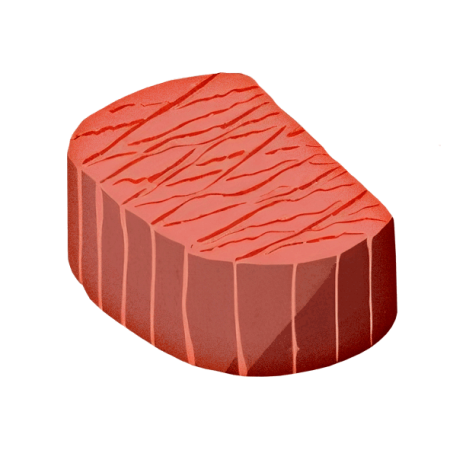
Filet Mignon
A Tender, Lean, and Luxurious Cut of Beef
270
Per steak
(150 grams)
CAL
C
Nutri-Score
Protein dense and with essential nutrients
Value per 100 grams & per cup:
400 calories / ~380 calories
Protein
22 grams / 33 grams (High-quality protein source)
Fats
10 grams / 15 grams (Moderate fat content)
Carbohydrates
Naturally carb-free
Fiber
No Fiber
Vitamins & Nutrients
- Iron: Essential for oxygen transport in the blood.
- Zinc: Supports immune function and wound healing.
- Vitamin B12: Crucial for red blood cell production and brain function.
- Niacin (Vitamin B3): Helps convert food into energy and supports skin health.
- Phosphorus: Important for bone and teeth health.
Satiety and Feelings
Filet mignon is a protein-rich food that promotes satiety and muscle repair. However, due to its leanness, it may not be as filling as fattier cuts of beef.
What does 100 g look like?
About half of a small steak or a thick slice of beef.
How Much to reach 2000/2500 calories?
1.1 kilograms (2.4 pounds) / 1.4 kilograms (3.1 pounds)
Daily Value per 100 grams %
Vitamin B12
80%
Vitamin B3 (Niacin)
40%
Iron
12%
Zinc
30%
Fiber
0%
Protein
45%
Sodium (Salt)
3%
Carbohydrates
0%
Total Fat
15%
Saturated Fat
Saturated Fat
25%
Cholesterol
22%
Sugar (natural)
Sugar
0%
Calories
9%
Did you know?
- Filet mignon comes from the tenderloin, one of the least-worked muscles in the cow, making it exceptionally tender.
- It’s often served rare or medium-rare to preserve its juiciness and tenderness.
- Despite its leanness, filet mignon is flavorful due to marbling and proper cooking techniques.
Drawback
- Low in fiber, making it less beneficial for digestion.
- High in saturated fat, which may contribute to heart disease if consumed in excess.
- More expensive than other cuts of beef.


